 By FMTeam
 India’s information technology industry provides software development, cloud migration, cybersecurity, engineering, consulting and business-process services to companies worldwide. In 2026, artificial intelligence and automation are creating new opportunities, although they are also changing traditional outsourcing contracts.
IT companies remain sensitive to technology spending in North America and Europe. Currency movements, employee costs and delayed client decisions can also affect earnings. The following companies have been selected based on their FY26 performance, deal wins, financial strength, digital capabilities and long-term growth potential.
| Company | Business Profile | FY26 Revenue | Main Strength | Investment Profile |
| TCS | Global IT services leader | $30.02 billion | Scale and client relationships | Lower-risk IT leader |
| Infosys | Consulting and digital transformation | $20.16 billion | Large deals and cash flow | Financially strong large-cap |
| HCLTech | IT services, engineering and software | $14.7 billion | Engineering and AI capabilities | Balanced growth opportunity |
| Persistent Systems | Digital engineering and cloud services | $1.65 billion | Faster revenue growth | Higher-growth mid-cap |
| Wipro | IT consulting and managed services | $9.9 billion | Large-deal momentum | Turnaround opportunity |
1. Tata Consultancy Services
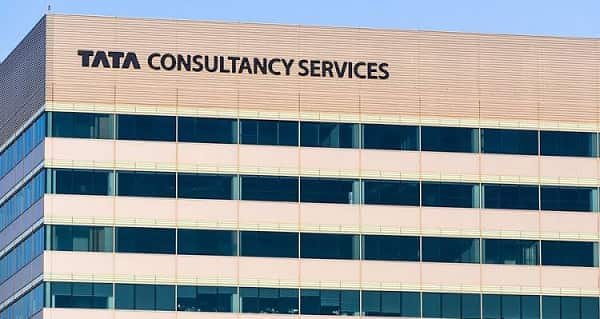
Best for: Scale, stability and long-term IT exposure
- FY26 revenue: $30.017 billion
- FY26 total contract value: $40.7 billion
- Operating margin: 25%
- Annualised AI revenue: More than $2.3 billion
TCS is India’s largest IT-services company. It provides consulting, software development, cloud modernisation, cybersecurity, engineering and managed services to global businesses.
The company secured $40.7 billion in total contract value during FY26, including five mega deals. Its client base included 66 customers generating more than $100 million in annual revenue. TCS also maintained an adjusted operating margin of 25%, supported by its scale and cost discipline.
Advantage: Long-standing client relationships, strong cash generation and a diversified industry portfolio reduce operational risk.
Limitation: Its large revenue base makes exceptionally high percentage growth more difficult to achieve.
2. Infosys
Best for: Large transformation deals and financial strength
- FY26 revenue: $20.158 billion
- Rupee revenue: ₹1,78,650 crore
- Large-deal value: $14.9 billion
- Adjusted operating margin: 21%
Infosys helps international companies modernise their technology systems, move applications to the cloud and introduce automation and artificial intelligence. Its Topaz platform supports enterprise AI adoption across different business processes.
FY26 revenue grew 3.1% in constant currency. Large-deal wins reached $14.9 billion, with net-new business representing 55% of the total. The company also generated free cash flow of ₹33,097 crore and completed an ₹18,000 crore share buyback.
Advantage: A strong balance sheet, high cash generation and established global customers provide financial stability.
Limitation: A major portion of revenue comes from North America, making growth sensitive to corporate technology budgets in that market.
3. HCL Technologies
Best for: Engineering services, cloud infrastructure and AI growth
- FY26 revenue: $14.7 billion
- Constant-currency revenue growth:9%
- New-deal TCV: $9.3 billion
- Annualised Advanced AI revenue: $620 million
HCLTech operates across IT services, engineering and research services, cloud infrastructure and enterprise software. Its engineering capabilities provide exposure to automotive, aerospace, semiconductor, telecom and manufacturing clients.
FY26 services revenue increased 4.8% in constant currency, while engineering and research services grew 9.8%. The company separately reported annualised Advanced AI revenue of $620 million, giving investors clearer visibility into its AI-related progress.
Advantage: Diversification across software, infrastructure and engineering creates several sources of revenue.
Limitation: Slower discretionary technology spending and project reductions by large customers can affect short-term growth.
4. Persistent Systems
Best for: Faster-growing digital engineering exposure
- FY26 revenue: $1.654 billion
- Rupee revenue: ₹14,748.45 crore
- Dollar-revenue growth:4%
- FY26 EBIT margin:6%
Persistent Systems specialises in software-product engineering, cloud transformation, data platforms and enterprise applications. Its smaller size allows major contracts and new customer relationships to have a greater effect on growth.
FY26 rupee revenue increased 23.5%, while profit after tax grew 33.2%. The company completed its 24th consecutive quarter of sequential revenue growth in Q4 FY26. Its order booking for the March quarter reached $600.8 million in total contract value.
Advantage: Strong revenue momentum and specialised digital-engineering capabilities offer greater growth potential.
Limitation: Premium valuations and lower margins than the largest IT companies can increase stock-price volatility.
5. Wipro
Best for: Large-deal momentum and business-turnaround potential
- FY26 gross revenue: ₹92,620 crore
- IT-services revenue: $10.48 billion
- Large-deal bookings: $7.8 billion
- FY26 net income: ₹13,200 crore
Wipro provides consulting, cloud, cybersecurity, engineering and business-process services. The company is reorganising parts of its business around AI-native services and outcome-based technology solutions.
FY26 gross revenue increased 4%, while total bookings reached $16.4 billion. Large-deal bookings grew 45.4% to $7.8 billion, indicating better contract momentum. However, constant-currency IT-services revenue declined 1.6%, showing that stronger bookings still need to translate into sustained revenue growth.
Advantage: Large global customers, improving deal bookings and substantial cash generation support recovery potential.
Limitation: Revenue growth remains weaker than that of Infosys, HCLTech and Persistent Systems.
Key Risks for Investors
Indian IT companies depend heavily on overseas customers. Economic weakness, protectionist policies, currency volatility and delayed corporate spending can reduce revenue growth. Artificial intelligence may create new contracts, but automation can also reduce employee requirements and billable work in traditional outsourcing services.
TCS offers the greatest scale and stability, while Infosys combines large deals with strong cash flow. HCLTech provides engineering and infrastructure exposure. Persistent Systems offers faster growth with higher valuation risk, while Wipro represents a turnaround-oriented opportunity.
Investors should compare valuations, revenue growth, margins, deal pipelines, client concentration and cash flow before investing. This article is for informational purposes only and should not be treated as investment advice.