 By FMTeam
 India’s railway sector continues to benefit from large government spending on new tracks, safety systems, freight corridors, station redevelopment, electrification and modern trains. The Union Budget 2026–27 planned a record railway capital expenditure of ₹2,93,030 crore, with major attention given to safety, high-speed connectivity and freight infrastructure.
However, railway stocks do not all follow the same business model. Some construct railway infrastructure, while others finance projects, manufacture coaches and wagons or supply specialised components.
The following companies were selected using their FY26 financial performance, order books, market position, railway exposure and long-term execution potential.
| Company | Railway Business Profile | FY26 Revenue or Income | Main Growth Catalyst | Investment Profile |
| Rail Vikas Nigam | Railway infrastructure and project execution | ₹20,412.12 crore | ₹99,262 crore order book | Large infrastructure opportunity |
| Indian Railway Finance Corporation | Railway financing and leasing | ₹27,284.15 crore | Expansion of railway financing | Lower-risk financing exposure |
| Titagarh Rail Systems | Wagons, metro coaches and trainsets | ₹3,143.58 crore | Vande Bharat and metro ramp-up | Manufacturing growth play |
| IRCON International | Railway and transport EPC projects | ₹9,071.1 crore | ₹24,984 crore order book | Established railway contractor |
| Jupiter Wagons | Wagons, wheelsets and braking systems | ₹2,961 crore* | Component integration and order execution | Higher-risk turnaround play |
*Jupiter Wagons’ figure represents consolidated total income.
1. Rail Vikas Nigam Limited
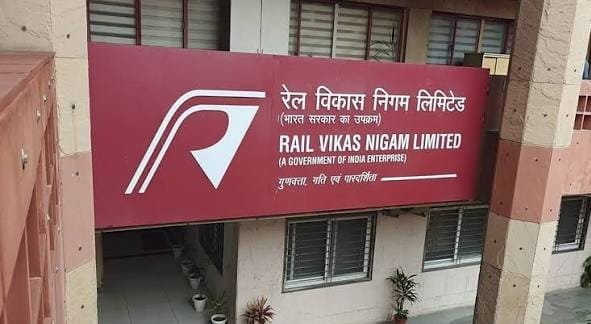
Best for: Large-scale railway infrastructure exposure
- FY26 consolidated revenue: ₹20,412.12 crore
- FY26 consolidated net profit: ₹870.66 crore
- Total order book: ₹99,262 crore
- Railway-related orders: Approximately ₹57,000 crore
- Signalling orders: Approximately ₹14,900 crore
Rail Vikas Nigam Limited, commonly known as RVNL, executes railway lines, electrification, signalling, metro, bridges and other transport infrastructure projects.
Its FY26 consolidated revenue increased by approximately 2.5%. However, profit declined because of weaker margins, higher execution costs and adjustments connected with certain contracts and joint ventures.
Key Growth Catalyst: Large and Diversified Order Book
RVNL ended March 2026 with an order book of ₹99,262 crore. Apart from core railway and signalling projects, the company has orders in metros, roads, ports, power transmission, irrigation and telecommunications.
Management has guided for stronger execution and revenue growth during FY27. Major projects include BharatNet, the Rishikesh–Karnaprayag railway line and a Vande Bharat sleeper-train programme.
Advantage: Its large order book offers several years of revenue visibility across important government infrastructure projects.
Limitation: Project delays, receivables and low-margin contracts can weaken cash flow and profitability even when revenue grows.
2. Indian Railway Finance Corporation
Best for: Financing-based railway exposure and stable earnings
- FY26 revenue from operations: ₹27,284.15 crore
- FY26 profit after tax: ₹7,009.17 crore
- Net interest income: ₹7,088.23 crore
- Assets under management: ₹4,84,616.77 crore
- Net interest margin:50%
Indian Railway Finance Corporation, or IRFC, raises funds and finances railway rolling stock and infrastructure assets. It earns mainly through lease arrangements and lending connected with the Ministry of Railways and other eligible organisations.
FY26 profit after tax increased by 7.8%, while revenue remained broadly stable. Around 92.56% of its assets under management were exposed to the Ministry of Railways, and the company reported no gross non-performing assets.
Key Growth Catalyst: Wider Infrastructure Financing
IRFC is expanding beyond traditional railway rolling-stock financing. It can finance companies and projects within the wider railway ecosystem while also exploring selected infrastructure sectors permitted under its business mandate.
Its high credit ratings and close relationship with the government help it borrow funds at comparatively competitive rates.
Advantage: The cost-plus lease structure and government-linked customer base provide relatively predictable earnings and low credit risk.
Limitation: IRFC operates with high leverage and a narrow interest margin. Changes in borrowing costs or railway financing requirements can affect growth.
3. Titagarh Rail Systems
Best for: Passenger coaches, Vande Bharat trains and railway manufacturing
- FY26 revenue: ₹3,143.58 crore
- Freight rail revenue: ₹2,604.25 crore
- Passenger rail revenue: ₹539.33 crore
- Standalone order book including subsidiary: Approximately ₹14,240 crore
- Total order book including share of joint ventures: Approximately ₹27,540 crore
Titagarh Rail Systems manufactures freight wagons, metro coaches, passenger trains, propulsion equipment and specialised railway vehicles.
FY26 revenue declined because of wheelset shortages and supply-chain disruptions. However, passenger rail revenue increased by 111%, supported by higher coach deliveries. The company is targeting the delivery of at least 200 passenger coaches during FY27.
Key Growth Catalyst: Passenger Rail Expansion
Passenger rail systems represented approximately ₹10,625 crore of Titagarh’s standalone railway order book. Its projects include metro coaches, propulsion systems and Vande Bharat sleeper trainsets.
The company’s joint ventures also cover forged railway wheels and the long-term maintenance of Vande Bharat trains. Including its proportionate share in these ventures, the total order book was approximately ₹27,540 crore.
Advantage: Titagarh offers direct exposure to India’s shift from conventional wagons towards modern passenger trains and metro systems.
Limitation: Manufacturing requires heavy investment, while component shortages and delayed customer approvals can affect deliveries.
4. IRCON International
Best for: Established railway construction and international EPC experience
- FY26 consolidated revenue: ₹9,071.1 crore
- FY26 EBITDA: ₹1,279.3 crore
- FY26 profit after tax: ₹591.9 crore
- Total order book: ₹24,984 crore
- Railway order book: ₹19,459 crore
IRCON International is a Navratna public-sector company specialising in railway construction, electrification, tunnelling, signalling, highways and other infrastructure projects.
Its FY26 revenue declined by 15.7%, while profit after tax fell by 18.7%. Nevertheless, EBITDA remained almost unchanged, indicating some protection from improved project mix and cost management.
Key Growth Catalyst: Railway Order Execution
Railway projects accounted for ₹19,459 crore of IRCON’s ₹24,984 crore order book at the end of FY26. The remaining orders covered highways and other infrastructure work.
The company’s long operating history and ability to execute projects in India and overseas provide access to large and technically demanding contracts.
Advantage: Strong government backing, established technical capabilities and a sizeable railway order book.
Limitation: FY26 revenue and profit declined, showing that a large order book does not guarantee immediate earnings growth.
5. Jupiter Wagons
Best for: Integrated exposure to wagons, railway wheels and components
- FY26 consolidated total income: ₹2,961 crore
- FY26 EBITDA: ₹363 crore
- FY26 profit after tax: ₹166 crore
- Closing order book: ₹4,675 crore
- FY26 EBITDA margin: Approximately 12.4%
Jupiter Wagons manufactures freight wagons, railway wheelsets, braking systems, containers and other mobility equipment.
FY26 was challenging. Total income declined by 26%, while profit after tax fell by 56%. Production and profitability were affected by slower wagon execution and changes in the company’s business mix.
Key Growth Catalyst: Railway Component Integration
Jupiter is expanding its railway wheelset business and has secured orders for axles and wheelsets used in freight wagons, metro trains, LHB coaches and Vande Bharat trains.
Its subsidiary has also received approval to begin producing freight braking systems. These activities can increase the company’s value addition beyond basic wagon manufacturing.
Advantage: Its portfolio covers complete wagons as well as important railway components, creating cross-selling and localisation opportunities.
Limitation: The sharp FY26 decline in revenue and profit makes execution recovery important. The stock carries higher operational risk than larger railway PSUs.
Key Risks for Investors
Railway stocks face several important risks:
- Dependence on government orders: Tender delays or changes in railway spending can affect order inflow.
- Slow project execution: Land acquisition, approvals and component shortages may postpone revenue.
- Working-capital pressure: Companies may spend heavily before receiving payments from government customers.
- Margin pressure: Competitive bidding can result in contracts with limited profitability.
- Raw-material costs: Steel, wheels and electrical components influence manufacturing margins.
- High valuations: Railway shares may correct sharply when earnings fail to match investor expectations.
RVNL provides the largest infrastructure order-book exposure, while IRFC offers a more stable financing model. Titagarh Rail Systems gives investors direct access to passenger and freight manufacturing. IRCON is an established project contractor, and Jupiter Wagons offers higher-risk exposure to railway equipment and components.
Investors should compare valuations, cash flow, order execution, debt and profit margins before investing. This article is for informational purposes and should not be treated as investment advice.