 By FMTeam
 For decades, the standard playbook for real estate investment has been relatively predictable: buy a condo in London, a single-family home in the The Home Counties, or perhaps a holiday apartment in the Mediterranean. While these remain solid strategies, a distinct shift is occurring among ultra-high-net-worth individuals and savvy investors. Capital is increasingly flowing toward Southeast Asia, specifically into luxury markets that offer a unique combination of asset appreciation, currency diversification, and lifestyle arbitrage.
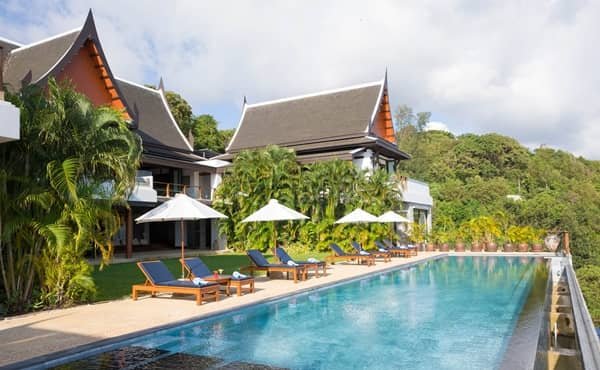
The “smart money” is not just chasing returns; it is chasing value. In markets like Phuket, Thailand, the luxury sector is maturing from a purely vacation-driven landscape into a robust investment class comparable to established global resort destinations. For investors looking to Buy luxury villa Phuket, the current market dynamics suggest that now is a pivotal time to enter a sector that is rapidly professionalising.
The Data Behind the Shift
The days of viewing Southeast Asian property solely as a “risky” emerging market play are fading for the luxury segment. The data suggests a decoupling of prime real estate from broader economic volatility. According to a report by the Bangkok Post, the residential market in Phuket has shown remarkable resilience and growth. In 2023 alone, residential prices surged by 10-15%, driven by a supply-demand imbalance in the premium sector. Furthermore, sales of resort villas quadrupled, jumping from a typical 100 units per year to over 400. This is not speculative hype; it is a tangible trend fueled by limited island geography and increasing demand from global buyers seeking safe havens for their capital.
Unlike mass-market condos which can suffer from oversupply, the luxury villa market is constrained by land availability. Strict zoning laws in Phuket prevent high-density construction in many coastal areas, ensuring that sea-view and beachfront inventory remains exclusive. For investors, this scarcity is a fundamental driver of long-term capital preservation.
The “Wellness” Dividend
One of the most compelling arguments for moving capital into this region is lifestyle arbitrage, or essentially receiving five-star value for a three-star price tag relative to Western markets. In 2025 and beyond, the definition of “luxury” has expanded to include wellness and privacy. Investors are not just buying square footage; they are buying ecosystems that support longevity and health. New developments in Phuket are increasingly centring around wellness communities, offering private pools, home gyms, and integration with nature that would cost exponentially more in the Algarve.
This “wellness dividend” also translates into rental yields. Properties that offer these high-end amenities are commanding rental returns of 7-10%, significantly outperforming the 3-4% yields typical in many saturated Western capitals. As global demographics shift toward an older, health-conscious population, assets that prioritise well-being are likely to see sustained demand.
The Critical Role of Local Expertise
While the opportunities are significant, navigating a foreign property market requires more than just capital; it requires distinct local knowledge. The legal frameworks regarding foreign ownership (such as leasehold vs. freehold structures) and zoning regulations in Thailand are specific and strictly enforced. For example, understanding the difference between a Chanote title and lesser land rights can be the difference between a secure asset and a legal headache.
Trying to navigate this landscape alone is a common pitfall for first-time overseas buyers. Just as you would not navigate a complex financial landscape without a qualified guide, securing international real estate demands professional representation. As highlighted in a guide on Finance Mostly, using a pro on your side is often the “secret weapon” to securing the best terms. Whether it is a mortgage broker finding exclusive rates or a real estate agent identifying off-market listings, expert guidance acts as a necessary filter against bad investments. In a market like Phuket, a reputable local agent ensures due diligence is performed on land titles and developer track records, which is non-negotiable for a safe transaction.
Strategic Acquisition in a Curated Market
For investors ready to execute this strategy, the focus should be on quality over volume. The most successful portfolios often feature properties that are “curated,” meaning assets that have been hand-picked for their location, build quality, and management potential. This is where boutique advisories distinguish themselves from mass-market aggregators. Firms that specialize in this high-touch approach help investors cut through the noise of the general market.
When evaluating properties, smart investors prioritise:
- Prime Locations: The “Golden Triangle” of Phuket (Bang Tao, Layan, Surin) continues to hold value best due to its proximity to high-end infrastructure.
- Management Structure: Villas with established rental management programmes allow for a truly passive income stream, removing the burden of day-to-day maintenance.
- Developer Reputation: In an off-plan market, the developer’s history of delivering on time and to spec is paramount to mitigating construction risk.
Conclusion
The movement of capital into Southeast Asian luxury real estate is more than a trend; it is a diversification strategy that acknowledges the changing center of gravity in the global economy. By combining high-growth potential with significant lifestyle benefits, markets like Phuket offer a compelling proposition for the modern investor. However, success in this arena remains a function of due diligence and professional partnership. The opportunity is real, but it favors those who approach it with the same rigor they would apply to any other high-value asset class.