 By Meghna Sharma
Managing taxes effectively is an important part of personal financial planning and business management. In India, taxpayers can reduce their tax burden through legitimate deductions, exemptions, and tax-saving investments. However, not every method of reducing taxes is legally acceptable. Understanding the difference between tax planning, tax avoidance, and tax evasion helps individuals, professionals, and businesses make informed financial decisions while complying with tax laws.
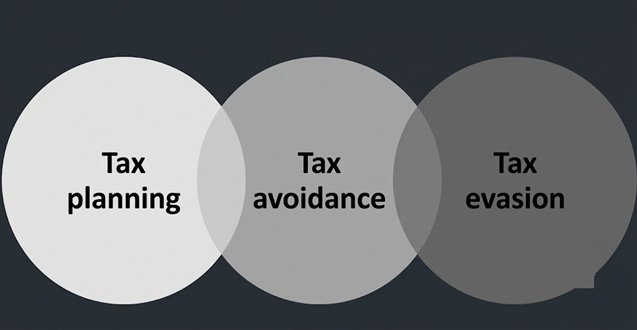
Although these three terms are sometimes used interchangeably, they have different meanings and legal implications. Tax planning involves using lawful provisions to manage tax liability, tax avoidance generally involves arrangements designed to minimise taxes through legal loopholes or questionable interpretations, and tax evasion involves deliberately concealing income or providing false information to escape tax obligations.
What Is Tax Planning?
Tax planning is the process of organising income, investments, expenses, and financial activities to reduce tax liability within the framework of applicable law. It involves understanding available deductions, exemptions, rebates, and tax regimes before making financial decisions.
For individuals, tax planning may include comparing the old and new income tax regimes, investing in eligible tax-saving instruments, and claiming deductions for which they qualify. Businesses may plan expenses, depreciation, capital investments, and other transactions in accordance with applicable tax provisions.
For example, an eligible taxpayer using the old tax regime may claim a deduction for qualifying investments under Section 80C of the Income-tax Act, 1961, subject to the prescribed limit and conditions. This is legitimate tax planning because the taxpayer uses an expressly permitted provision.
Effective tax planning should begin early in the financial year rather than just before filing an income tax return. It can help taxpayers manage cash flow, avoid unnecessary tax payments, and maintain proper financial records.
What Is Tax Avoidance?
Tax avoidance generally refers to arranging financial transactions to reduce tax liability by exploiting loopholes, technical interpretations, or gaps in tax legislation. Some arrangements may technically comply with the wording of a provision but still attract scrutiny when they lack commercial substance or are designed primarily to obtain an unintended tax benefit.
Tax avoidance is not always automatically illegal. Its treatment depends on the applicable law, the facts of the arrangement, and whether specific anti-avoidance provisions apply.
For example, a business might structure a transaction through an artificial arrangement that appears to qualify for a tax benefit but has little genuine commercial purpose. If the arrangement falls within India’s General Anti-Avoidance Rule (GAAR), tax authorities may be able to deny the benefit.
India’s GAAR provisions are designed to address impermissible avoidance arrangements that meet specified statutory conditions. Therefore, taxpayers should not assume that a transaction is acceptable simply because it appears to follow the literal wording of a tax rule.
Taxpayers considering complex arrangements should obtain professional advice and ensure that transactions have genuine commercial substance and comply with applicable reporting requirements.
What Is Tax Evasion?
Tax evasion is the illegal and deliberate attempt to escape tax by concealing income, falsifying records, misrepresenting transactions, or claiming benefits to which the taxpayer is not entitled.
Unlike ordinary tax planning, tax evasion involves unlawful conduct and can lead to tax demands, interest, penalties, and prosecution where the legal requirements are met.
Common examples include:
- Deliberately failing to report income from business or freelance work.
- Maintaining false accounts or creating fictitious expenses to reduce taxable profits.
- Hiding taxable income or assets from the authorities.
- Claiming deductions using forged receipts or fabricated documents.
- Concealing sales or cash receipts to understate business income.
For instance, if a business earns ₹20 lakh but deliberately reports only ₹12 lakh to reduce its tax liability, the unreported income may lead to serious consequences if the conduct violates tax law.
Taxpayers should correct genuine reporting mistakes promptly and seek professional advice if they discover errors in a filed return.
Tax Planning vs Tax Avoidance vs Tax Evasion: Key Differences
| Basis | Tax Planning | Tax Avoidance | Tax Evasion |
| Meaning | Legally organising finances to manage taxes | Using arrangements to obtain tax advantages, potentially exploiting loopholes | Illegally concealing income or misrepresenting information |
| Legal status | Generally lawful | Depends on the arrangement and applicable anti-avoidance rules | Unlawful when it involves deliberate tax evasion |
| Method | Eligible deductions, exemptions, and tax-saving investments | Artificial or questionable arrangements designed to obtain tax benefits | False records, concealed income, or fraudulent claims |
| Main risk | Incorrect claims if rules are misunderstood | Tax benefits may be denied under applicable law | Tax demands, penalties, interest, and possible prosecution |
| Example | Claiming an eligible deduction with supporting documents | Creating an artificial transaction without genuine commercial substance | Hiding business receipts to understate taxable income |
India’s General Anti-Avoidance Rule (GAAR), retained under the Income-tax Act, 2025, can address impermissible avoidance arrangements that meet the statutory conditions. Section 179 of the new Act corresponds to Section 96 of the former Income-tax Act, 1961.
How Can Taxpayers Stay Compliant?
Individuals and businesses can reduce tax-related risks by following a few practical steps:
- Maintain accurate records of income, expenses, investments, and tax payments.
- Claim only deductions and exemptions for which they qualify.
- Report income from all applicable sources, including interest, rent, capital gains, and business activities.
- Keep invoices, bank statements, and supporting documents for tax claims.
- Seek professional advice before entering complex transactions designed primarily to reduce tax.
- Review tax returns carefully before submission and correct errors through the legally available procedures.
Taxpayers should also check the rules applicable to the relevant tax year, particularly because the Income-tax Act, 2025 came into force on 1 April 2026.
Conclusion
Tax planning, tax avoidance, and tax evasion differ in their methods, legal implications, and risks. Tax planning uses legitimate provisions to manage tax liability. Tax avoidance involves arrangements that may attract scrutiny or be challenged under anti-avoidance rules. Tax evasion involves unlawful attempts to escape taxes through concealment, false information, or fraud.
For individuals, professionals, and businesses in India, the safest approach is to plan taxes using genuine transactions, maintain accurate records, and comply with reporting requirements. Professional guidance can help taxpayers minimise their tax burden without exposing themselves to unnecessary legal and financial risks.
Frequently Asked Questions (FAQs)
Q. Is tax planning legal in India?
Yes. Tax planning is generally legal when taxpayers use legitimate deductions, exemptions, rebates, and other provisions while meeting the applicable conditions.
Q. Is tax avoidance always illegal?
Not necessarily. Some tax avoidance arrangements may technically comply with particular provisions, but arrangements meeting the conditions for impermissible avoidance can be challenged under GAAR.
Q. What is an example of tax evasion?
Deliberately concealing business income, fabricating expenses, or submitting false documents to reduce tax liability can constitute tax evasion.
Q. What are the consequences of tax evasion in India?
Depending on the facts and applicable law, consequences may include additional tax demands, interest, penalties, and prosecution.
Q. How can small businesses reduce taxes legally?
Small businesses can review eligible deductions, choose suitable tax regimes, maintain accurate accounts, and comply with applicable tax-saving provisions.
Q. What is the difference between tax avoidance and tax evasion?
Tax avoidance generally involves arrangements intended to reduce tax, sometimes by exploiting legal gaps. Tax evasion involves unlawful conduct, such as deliberately hiding income or submitting false information.