 By FMTeam
 For many Chief Financial Officers and business owners, commercial real estate is simply a line item on the profit and loss statement. It represents a significant fixed cost, often second only to payroll. Consequently, the traditional approach to office management has been one of cost containment reducing square footage per employee and seeking the lowest possible rent.
However, viewing the workplace strictly as a liability is a strategic error. In the modern business landscape, the physical environment is an active asset that directly influences the company’s most expensive resource, which is its people. When optimised correctly, the workspace becomes a tool for retention, efficiency, and brand alignment. When neglected, it becomes a silent drain on profitability through increased turnover and reduced output.
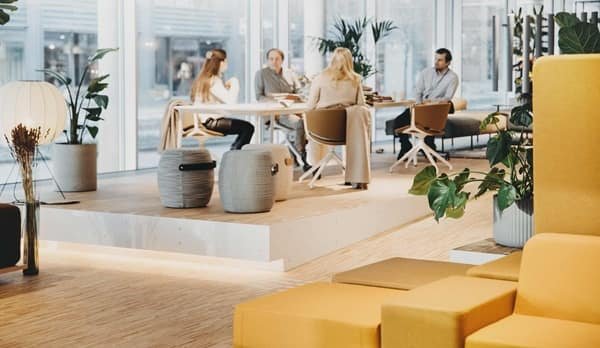
The Cost of Poor Design
To understand the Return on Investment (ROI) of workspace design, one must first calculate the cost of a dysfunctional environment. Poor lighting, excessive noise levels, and lack of collaborative space. Do not just annoy staff, they actively impede work.
Consider the financial implications of employee turnover. Recruitment, onboarding, and the ramp-up period for a new hire can cost a company between 50% to 200% of the departing employee’s annual salary. If a cramped or uninspiring office contributes to even a slight increase in attrition, the financial loss far outweighs the savings made on cheaper furniture or denser seating arrangements.
Businesses must evaluate their physical space against key performance metrics:
- Absenteeism rates: Does the environment support health and wellbeing?
- Collaboration frequency: Does the layout encourage or block communication?
- Focus time: Can employees work without constant distraction?
The Strategic Value of Professional Layouts
Achieving a high-performance workplace requires more than simply buying ergonomic chairs or painting a wall a vibrant colour. It requires a deep understanding of workflow and organisational culture. This is where investing in professional office design services transitions from an aesthetic choice to a financial strategy.
Expert designers analyse how a business operates before drawing a single line. They identify bottlenecks in communication and create zones that cater to different working styles. For instance, a sales team might need a high-energy, open floor plan to feed off each other’s momentum, while a legal or coding team might require acoustic privacy to maintain high levels of concentration.
By aligning the physical space with operational needs, businesses can unlock “found capacity” in their workforce. If a better design saves an employee 15 minutes of distraction per day, that aggregates to tens of thousands of hours of productivity across a large organisation annually.
Balancing Efficiency with Experience
There is often a tension between operational efficiency, such as keeping costs low, and employee experience, such as keeping engagement high. Smart businesses know when to leverage cost-saving mechanisms and when to invest in infrastructure.
For example, when expanding into new markets or testing a new territory, maintaining a lean footprint is essential. While using a Virtual Place of Business for registration is a brilliant strategy for reducing initial overheads and avoiding long-term leases during expansion phases, established enterprises must view their physical headquarters differently. Once a team is established, the physical HQ must function as a productivity engine rather than a mere compliance requirement.
The physical office is the hardware upon which the “software” of company culture runs. If the hardware is outdated or insufficient, the culture suffers.
Data-Driven Decisions in Design
The link between design and performance is no longer anecdotal. It is backed by substantial data. Companies are increasingly using sensors and surveys to measure how space usage correlates with output.
According to the Global Workplace Survey 2024 by Gensler, top-performing companies have realised that workplace success is no longer defined just by building efficiency or occupancy density. Instead, it is measured by the “emotional response to space.” The report highlights that high-performing workplaces are those that offer a variety of settings, allowing employees to choose where and how they work best.
This data suggests that the “one-size-fits-all” open plan is obsolete. The highest ROI comes from activity-based working environments that provide:
- Focus Rooms: Soundproof pods for deep work or confidential calls.
- Collaboration Hubs: Tech-enabled spaces for hybrid meetings.
- Social Zones: Cafeteria-style areas that foster casual collisions and innovation.
Conclusion
In 2026, an office is not just a place to house desks. It is a tool to house talent. For business leaders, the challenge is to shift the mindset from cost per square foot to profit per employee. By treating the workspace as a strategic investment rather than a sunk cost, companies can create environments that attract top tier talent, reduce costly turnover, and ultimately drive a healthier bottom line. The most profitable office is not the cheapest one to rent, but the one that empowers the workforce to perform at its peak.