 By FMTeam
 Many D2C founders build strong products, invest in marketing, and still watch customers churn quietly after one bad delivery. The problem is not the product. It is the last mile. India’s D2C market is projected to reach $60 billion by 2030, yet 63% of consumers switch to a different retailer when shipping takes too long.
Your delivery partner directly decides whether customers come back or leave. Choosing the right one is not an operational detail. It is a business-critical decision. This article walks through the key factors every D2C brand should evaluate before committing to a logistics partner.
Why Delivery Is a Brand Experience, Not Just a Business Function
The D2C model is built on the promise of a direct, high-quality customer relationship. Unlike marketplace selling, you own the entire journey. That means every aspect of post-purchase experience, including tracking updates, packaging quality, delivery speed, and return experience, reflects directly on your brand.
A customer who receives a damaged order from a third-party marketplace might blame the platform. A customer who has the same experience with your D2C brand will blame you. This is the reality of running a direct business. Your delivery partner is, in many ways, an extension of your brand.
What to Look for in a D2C Delivery Partner
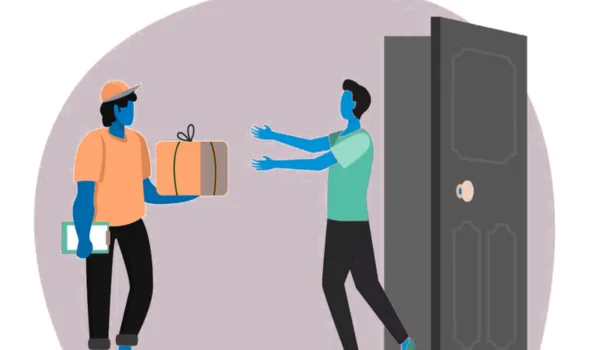
1. Serviceability and Geographic Reach
Before anything else, you need to understand whether a logistics provider can actually deliver to your target markets. For D2C brands serving customers across India, including tier 2 and tier 3 cities, as coverage gaps can directly translate into lost revenue.
Ask for a clear PIN code serviceability report. If your customer base is concentrated in metros, that may be sufficient initially. But if you’re building for scale, you need a partner who can grow with you into newer geographies.
When choosing the right courier delivery partner for your D2C operations, this is the first filter I recommend applying. A partner with limited reach will become a bottleneck the moment you decide to run a pan-India campaign.
2. Delivery Speed and SLA Compliance
Today’s online shoppers have been conditioned by quick-commerce and marketplace delivery standards. Speed has become a hygiene factor, not a differentiator. What truly matters is SLA consistency — the percentage of deliveries made within the promised timeframe.
Before onboarding any courier partner, ask for their SLA performance data across delivery zones, and specifically for routes that are most critical to your business. A provider with a 93% SLA in Tier 1 cities but a 65% SLA in Tier 2 areas is only useful to you if you’re not targeting smaller markets.
3. Real-Time Tracking and Tech Integration
Modern logistics is inseparable from technology. For a D2C brand, real-time tracking is not just a convenience but a core component of customer experience. When customers can track their orders, inbound “where is my order” queries drop significantly, and satisfaction improves.
Look for a delivery partner that offers API integration with your e-commerce platform or OMS, automated delivery status updates via SMS and email, and a well-maintained tracking portal. Operational efficiency through the right tech stack is no longer optional; it’s a competitive necessity.
4. Returns Management Capabilities
Returns are a part of the D2C reality, especially in categories like fashion, footwear, and electronics. A poor reverse logistics experience ( slow pickups, delayed refund processing, lost return packages ) can damage your customer retention metrics as much as a bad first delivery.
Your delivery partner should have a structured reverse logistics workflow: scheduled reverse pickup windows, real-time return tracking, and clean reconciliation of returned items with your inventory system. When evaluating partners, specifically ask how they handle failed deliveries and what their return-to-origin (RTO) rates look like in different zones. High RTO rates can be a high hidden cost.
5. Pricing Transparency and Volume Flexibility
For early-stage D2C startups, cash flow is tight. Delivery costs directly impact your unit economics, so you need pricing that is transparent, predictable, and ideally scales favorably as your order volumes increase.
Watch for hidden charges: fuel surcharges, remote area delivery fees, weight discrepancy adjustments, and COD handling charges. Before signing any agreement, map out your average shipment profile and calculate the true all-in cost per order, not just the base rate.
Also, understand how the partner handles volume fluctuations. D2C brands often experience sharp spikes during sales events. A delivery partner that cannot scale operations during peak periods will leave your customers disappointed at precisely the moment it matters most.
Red Flags to Watch For
Not every courier company that claims to serve D2C businesses is actually built for it. Here are a few warning signs I’ve consistently seen:
- No dedicated support channel. If there’s no clear escalation path for issue resolution, you’ll lose days trying to resolve delivery exceptions.
- Opaque data sharing. Delivery partners should be willing to share shipment-level performance data. If they resist, that’s a red flag.
- One-size-fits-all pricing. D2C businesses have diverse needs. A good partner will work with you to structure pricing around your actual shipping profile.
- Poor NDR (Non-Delivery Report) management. Failed delivery attempts must be followed up on proactively. Partners without a structured NDR process inflate your RTO rates and cost you both product and delivery fees.
The Bigger Picture: Logistics as a Growth Lever
India’s D2C market is at an inflection point. According to a McKinsey analysis, the D2C channel in India accounts for $10–12 billion in ecommerce sales today and could reach $60 billion by 2030. For brands looking to capture their share of that growth, logistics is not a cost center; it is a growth enabler.
The logistics ecosystem in India has matured significantly, with several players now offering tech-forward, D2C-specific solutions. Interestingly, India’s fast-growing gig-economy platforms have also expanded into delivery. Rapido, for instance, started as a bike-taxi platform but has extended its reach into delivery services, reflecting how the broader logistics landscape in India continues to evolve.
For SMEs and personal courier needs within the D2C space, it’s worth exploring providers that offer flexible, scalable models suited to businesses at different stages of growth.
Final Thoughts
There is no universal “best” delivery partner for every D2C brand. The right choice depends on your category, average order value, geographic footprint, return rates, and growth trajectory. What I do believe, however, is that the evaluation process should be structured and rigorous.
Treat your delivery partner selection the way you would treat hiring a key team member. Do the due diligence, ask the hard questions, and don’t let a low per-shipment rate distract you from what actually matters: consistent, reliable, brand-aligned delivery experiences that keep your customers coming back.
In the D2C world, your courier is your last impression. Make sure it’s a good one.